
The history of TV in Australia
From “Good evening, and welcome to television” in 1956 to 100-inch screens today, told by the people who've been putting antennas on Aussie roofs since 1991.
- 1956
“Good evening, and welcome to television”
At 7pm on Sunday 16 September 1956, Bruce Gyngell welcomed Sydney to TCN-9 and Australian television began. The famous clip most of us have seen was actually re-created a year later for TCN-9's first anniversary, because the opening night wasn't filmed. Watch "Good evening, and welcome to television" at the NFSA.
Pictures were black and white, and the antenna on the roof became a status symbol. Viewers also paid a licence fee, and some people hid their antenna in the roof to dodge the inspectors.
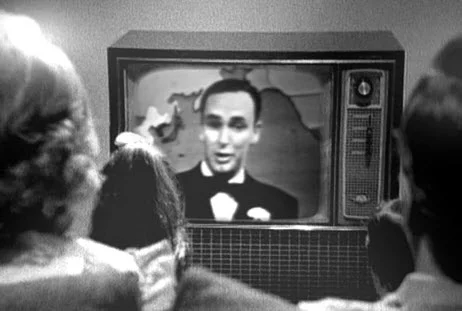
Bruce Gyngell: “Good evening, and welcome to television.” - 1960s
An antenna on every roof
TV stations opened across the capital cities and the regions, and the rooftop antenna became part of the Aussie skyline. The TV itself was a big square box in a timber cabinet, with a 4:3 picture.
- 1975
Colour arrives
Regular colour broadcasts started on 1 March 1975. Families crowded around the new colour sets, and many homes upgraded their antenna to get the best from the new pictures.
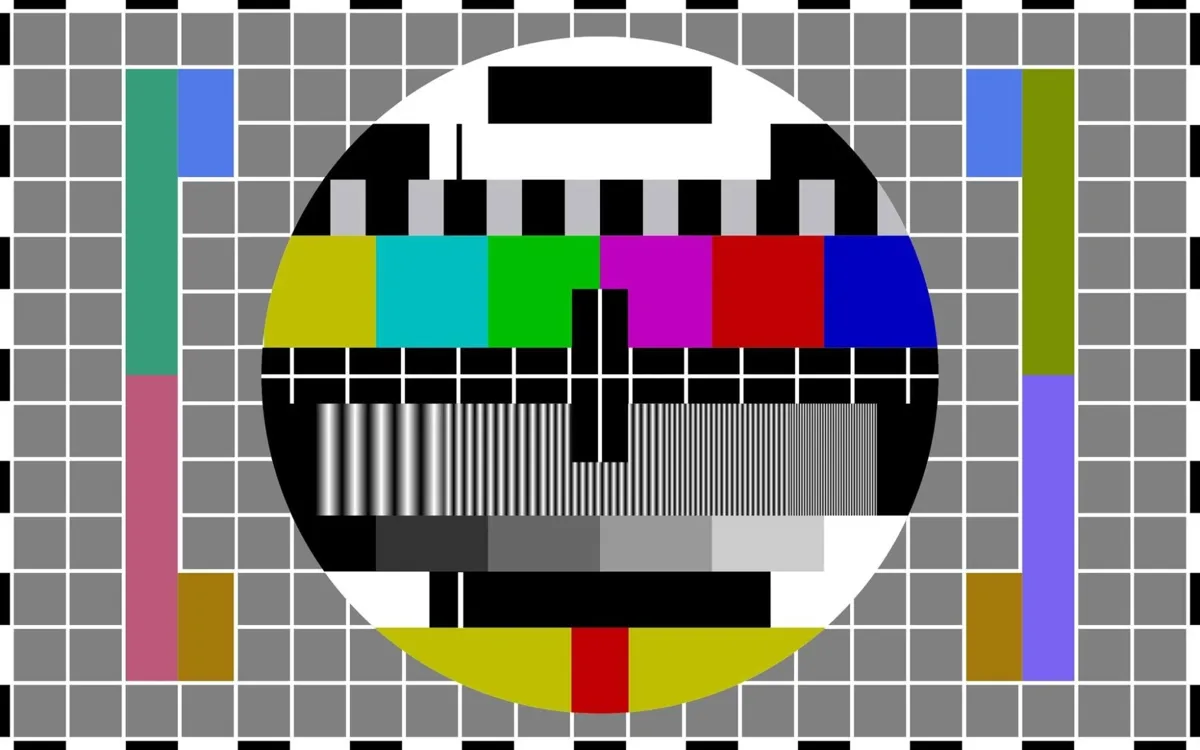
The colour test pattern: what you saw on screen when nothing was on air. - 1991
Mr Antenna starts
Mr Antenna begins looking after Aussie homes, with the same 13 11 49 number it still has today.
- 1990s
Jumbo rear-projection TVs
Anyone remember these? Rear-projection TVs started turning up in Aussie homes in the late 1980s and were at their peak through the 1990s. Inside a cabinet the size of a fridge, three picture tubes projected the image onto a giant screen from behind.
They were big, but unless the room was completely dark you couldn't really see a thing. You needed five blokes to carry one in, and a truck and trailer to get it home. Who would have thought that a few years down the track, TVs would be about 10 millimetres thick? Things have certainly changed for the better.
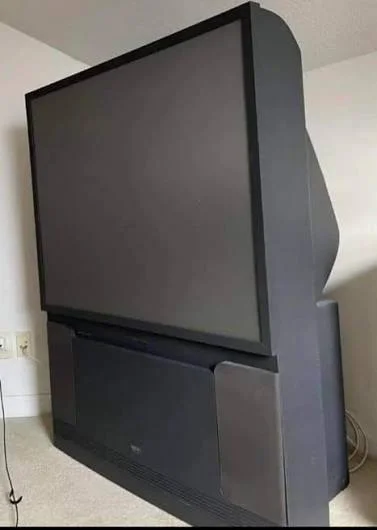
A first-generation jumbo rear-projection TV. - 1995
Pay TV: Galaxy, Foxtel and Optus Vision
Galaxy, run by Australis, launched Australia's first pay TV in January 1995. It started on microwave, beamed from transmitters in the city to special rooftop antennas, and from September 1995 it was also sent by satellite, from an Optus satellite to dishes on the roof. Foxtel and Optus Vision followed later that year over cable.
Andrew Parke, our owner, was one of the first installers of satellite TV in Australia. He was part of the team that installed Galaxy for the corporate offices and high flyers across Sydney's North Shore.
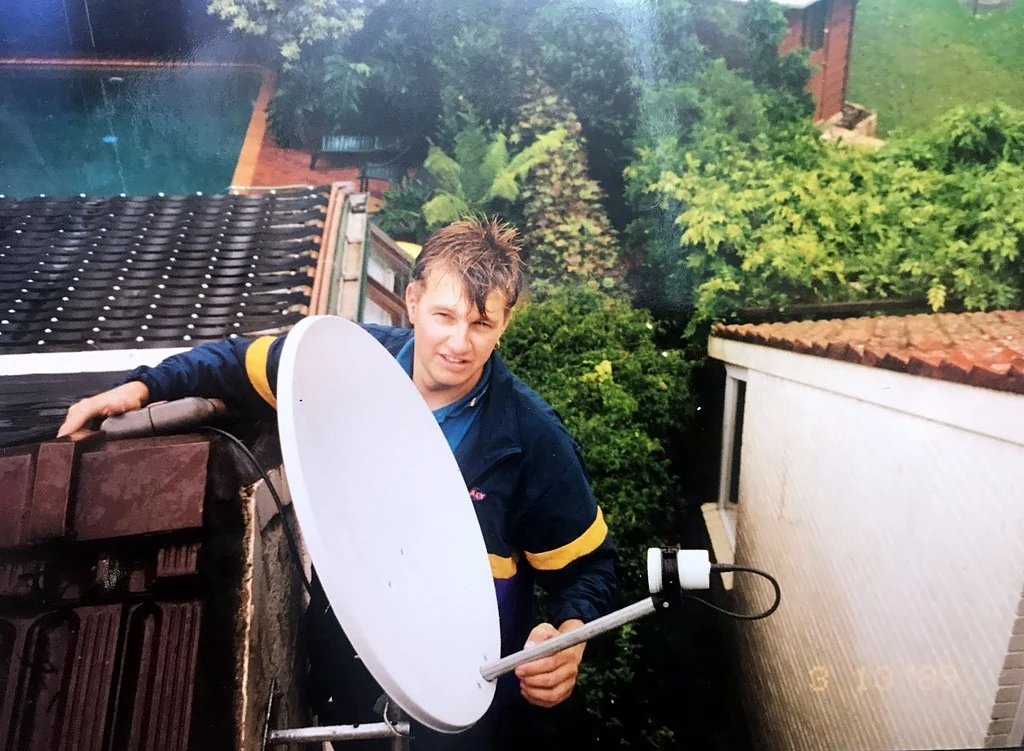
Andrew Parke installing a Galaxy satellite dish, late 1995 or early 1996, a few months after Galaxy started on satellite. 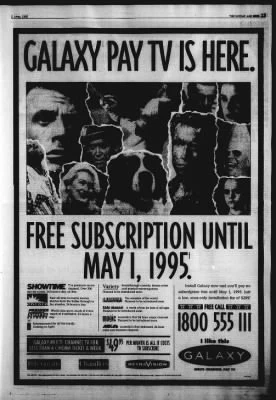
Galaxy's 1995 launch ad: “Galaxy Pay TV is here.” - 1997
The Castle: a man and his antenna
No history of Aussie TV would be complete without Darryl Kerrigan. In The Castle, he proudly shows the valuer around 3 Highview Crescent and gazes up at the antenna on his roof like it's a work of art. Every antenna technician in the country has a soft spot for this scene.
- 1998
Galaxy becomes Foxtel
Australis collapsed in 1998 and Foxtel took over Galaxy's subscribers, launching its own satellite service in 1999. Satellite dishes started appearing next to antennas on Aussie roofs.
- 2001
Digital TV and the first flat screens
Digital TV began in the five largest capital cities on 1 January 2001, bringing widescreen 16:9 pictures and high definition. Flat plasma screens arrived too: one of the first 42-inch plasmas shown in Australia carried a price tag of about $18,000.
- 2008–2011
Freeview, iview and a wave of new channels
The Freeview brand launched in November 2008 to promote free digital TV, and the ABC started iview, its catch-up service over the internet, the same year.
Most of the new free channels came a little later, right in the middle of the switchover: One HD in March 2009, GO! in August 2009 and 7TWO in November 2009, then 7mate and GEM in September 2010 and Eleven in January 2011. Suddenly there was a lot more to watch, as long as your antenna was up to it.
- 2010–2013

The digital switchover
Analogue TV was switched off region by region, from June 2010 until the final switch-off on 10 December 2013. Millions of homes needed their antenna checked, upgraded or re-pointed, and the VAST satellite service started for remote homes.
Andrew sat on the government steering committee and was in charge of auditing satellite and digital antenna installations right across Australia, from the cities to Uluru and the Torres Strait Islands.
Under the government's Satellite Subsidy Scheme, homes in remote Aboriginal communities each received a satellite dish and set-top box for the VAST service, so families in the outback could watch the full range of free-to-air channels for the first time.
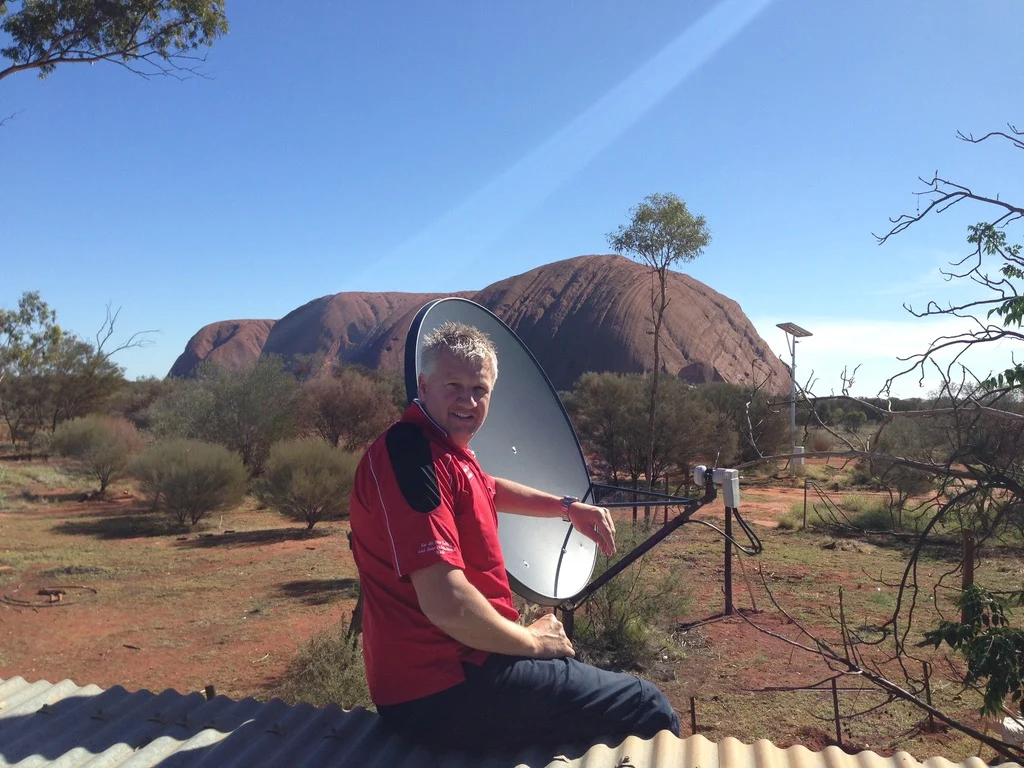
Andrew Parke at a remote Aboriginal community near Uluru, May 2013. - 2015
Streaming takes over
Faster internet changed everything. ADSL over the old copper phone lines, and then the NBN, became quick enough to stream whole TV shows and movies in high definition, helped by clever video compression that shrinks the file without spoiling the picture. FreeviewPlus arrived in September 2014, putting the networks' catch-up shows right into the TV guide.
Stan launched on Australia Day 2015 and Netflix arrived on 24 March 2015. We all know the story: Netflix started out posting DVDs, Blockbuster passed on the chance to buy it, and a few years later the video stores were gone. Prime Video followed in 2016, Apple TV+ in 2019 and Paramount+ in 2021, and today there are hundreds of streaming services to choose from, alongside the networks' own apps (ABC iview, SBS On Demand, 7plus, 9Now and 10).
Remember Friday nights at the video store? Two hours walking the aisles to find a VHS, then home with a Choc Top to watch it. Now we spend two hours flicking between Netflix, Prime and Apple TV deciding what to watch. Better or worse? Tell us on Facebook.
One thing hasn't changed: the antenna is still the most reliable way to watch live free-to-air TV, especially the big sport.
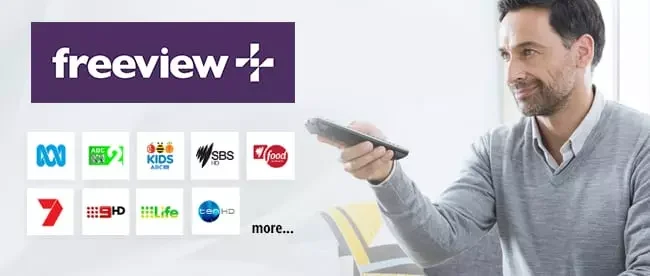
FreeviewPlus (2014): live TV and catch-up in one guide. 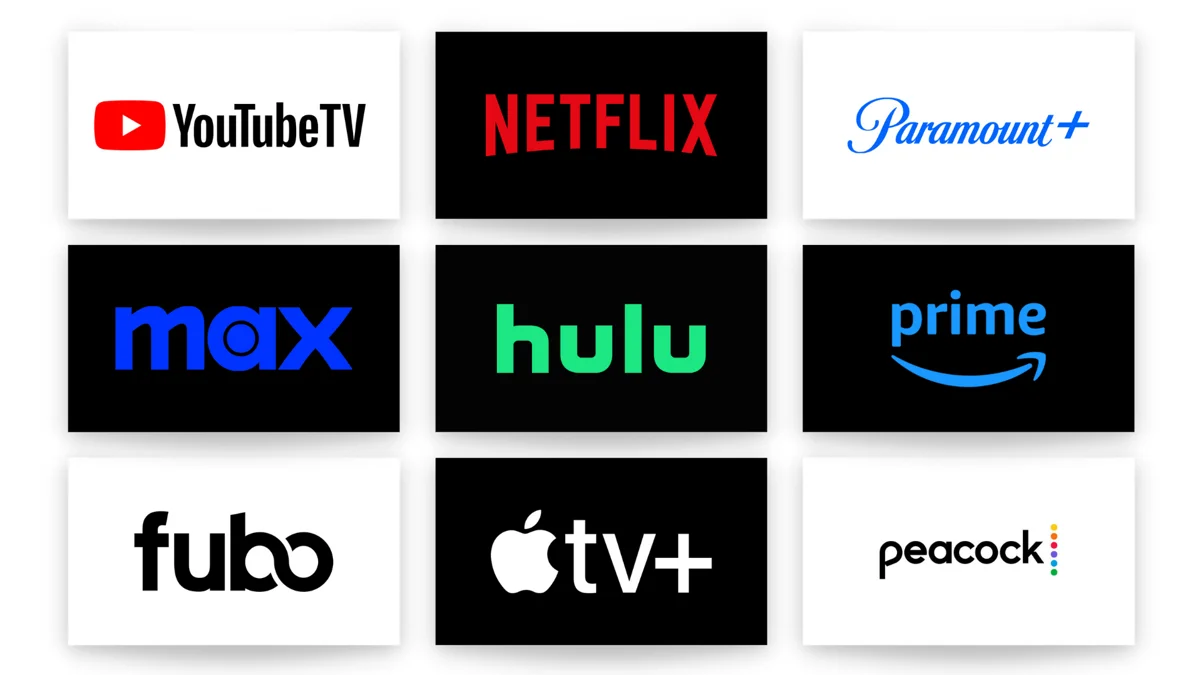
Today's streaming services. Some of these are only available overseas. - Today
Bigger screens, sharper pictures
4K pictures are standard and screens of 75 to 100 inches are common in Aussie lounge rooms, for a fraction of what that first plasma cost. Starlink now brings fast internet to rural homes, and a quality antenna still delivers free-to-air TV with no buffering.
- Next?
Where is TV heading?
Glasses-free 3D? TVs that roll up or hang like wallpaper? Every channel over the internet? We'd love to hear where you think TV is going next. Tell us on Facebook.
The humble TV antenna: still on the roof, 70 years on
Screens keep changing, but a quality antenna is still the most reliable way to watch free-to-air TV. Our local technicians can check yours for free.